Braille & Alternative Format Services
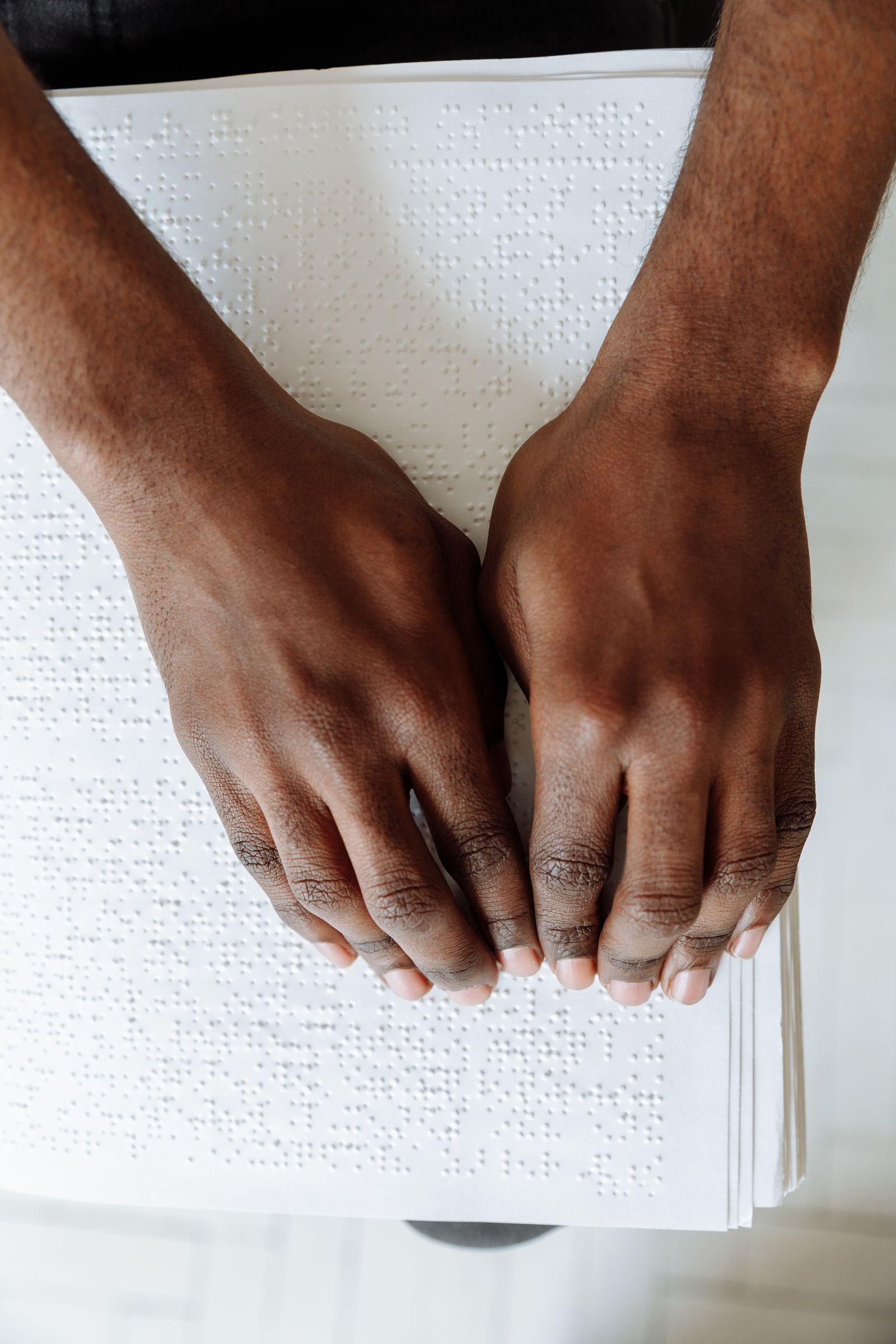
Braille, large print, audio, and accessible electronic documents — produced to standard, so when a reader requests an accessible format, the ADA's effective-communication obligation is something you can actually meet.
5.0 average rating on Google reviews Quotes returned same business day
 Certified GSA Schedule Holder
 - GSA Schedule Holder - NASPO ValuePoint Contract Holder - Trusted by State & Federal Agencies - Serving Major U.S. School Districts
What are alternative formats under the ADA?
Alternative formats are accessible versions of printed or digital material for people who are blind, have low vision, or have print disabilities — most commonly braille, large print, accessible electronic documents, and audio. The ADA's effective-communication requirement means covered organizations may need to provide them on request; which format fits depends on the reader and the material.
An accessible-format request comes with a clock on it
When a resident, patient, student, or customer can't read a document in its standard form, the information in it is effectively unavailable to them — and under the ADA and Section 504, providing an accessible version is a legal obligation, not a courtesy. An organization with no braille or large-print pipeline turns each request into a scramble, a delay, and a documented failure of effective communication.
A production partner organizations have trusted since 2009
Taika Translations has delivered 102,000+ projects for agencies, school districts, healthcare organizations, and businesses — trusted by state and federal agencies, purchasable through GSA and NASPO ValuePoint contracts, with a 5.0★ Google rating. Braille is transcribed to Unified English Braille (UEB) with the Nemeth Code where technical content requires it, and because Taika also translates across 300+ languages, language access and disability access come from one accountable vendor.
How alternative-format projects run
-
Tell us the documents and formats
Request a quote with your document set, the formats needed — braille, large print, audio, accessible electronic — and your timeline.
-
Production to standard
Braille transcribed to UEB (Nemeth for technical content), large print reformatted to accessible type and contrast, audio recorded clearly, electronic files tagged and structured.
-
Delivery — and a pipeline for next time
Formats delivered ready to hand to the reader, with a standing process so future requests are routine instead of a scramble.
What you get
-
Braille to UEB standard
Transcription in Unified English Braille, with the Nemeth Code applied to technical and mathematical content where appropriate.
-
Large print that's actually accessible
Reformatted to accessible type sizes, spacing, and contrast — not just the same layout zoomed in.
-
Audio versions
Clear spoken-word recordings of written material for readers who need or prefer listening.
-
Accessible electronic documents
Properly tagged, screen-reader-friendly PDF and Word files with correct reading order and structure.
-
Built around effective communication
Formats mapped to the ADA, Section 504, Section 508, and IDEA obligations your organization actually carries.
-
Multilingual + accessible
Documents translated across 300+ languages and produced in accessible formats — one vendor, one workflow.
When a resident, patient, student, or customer can’t read a document in its standard form, the information in it is effectively unavailable to them — and for many organizations, providing an accessible version on request is a legal obligation, not a courtesy. Braille and alternative formats close that gap.
Taika Translations produces accessible versions of your printed and digital materials — braille in Unified English Braille, large print, audio, and tagged electronic documents — so they reach readers who are blind, have low vision, or have other print disabilities. Tell us the documents, the formats you need, and your timeline, and we’ll scope the work: request a quote to begin, or see the full accessibility and compliance services.
- Trusted by State & Federal Agencies
- 5.0★ Google Rating
- GSA Schedule Holder
Who this is for
- Government notices, benefits, and program materials
- Election and voter information
- Healthcare and insurance communications
- Utility statements and bills
- School and campus materials, including student-facing documents
- Customer-facing documents, handbooks, and menus
How quality is verified
- Transcription and production to the named standard — UEB and Nemeth for braille, accessible type specifications for large print, tagged structure for electronic files
- Independent review pass checking the accessible version against the source for completeness and fidelity
- Delivery in the format the reader will actually use, with the source obligation (ADA, 504, 508, IDEA) documented in scope
What clients say
-
“Truly exceptional communicators. A real pleasure to work with — everything is done right. AAA+”
Edward · longtime partner
-
“[Taika] consistently exceeded our expectations... over the past six months.”
Shelley Bales · Belton Independent School District (BISD)
Credentials & registrations
- Trusted by State & Federal Agencies
- GSA Schedule Holder
- NASPO ValuePoint
- Veteran-Owned (VOSB)
- HIPAA-Trained Staff
- 5.0★ Google Rating
Frequently Asked Questions
What are alternative formats?
Alternative formats are accessible versions of printed or digital material for people who are blind, have low vision, or have print disabilities — most commonly braille, large print, accessible electronic documents (properly tagged PDF or Word), and audio. Which format fits depends on the reader's needs and how the material will be used.
When is an organization required to provide braille or alternative formats?
The ADA and Section 504 of the Rehabilitation Act require state and local governments, public accommodations, and federally funded programs to communicate effectively with people with disabilities, which can include providing materials in an accessible format on request. Section 508 sets the standard for federal agencies' electronic content, and the IDEA covers accessible instructional materials for students. The specific obligation depends on the setting.
What braille standard does Taika use?
Braille transcription in the United States follows Unified English Braille (UEB), the standard adopted for English-language braille, with the Nemeth Code used for technical and mathematical content where appropriate. Tell us the content type when you request a quote so the right transcription approach is applied.
What kinds of documents can be produced in alternative formats?
Public notices, benefits and program materials, statements and bills, election and voter materials, patient and member communications, student materials, handbooks, and menus, among others. Share your document set and the formats you need, and Taika will scope the work.
Can documents be translated and then produced in braille or another format?
Yes — Taika translates across 300+ languages and can produce the translated document in an accessible format in the same workflow, where an established braille code exists for the target language. Describe the languages and formats you need when requesting a quote.
Do you also make the standard electronic version accessible?
Yes — alongside braille, large print, and audio, Taika remediates the underlying PDF or Word file to a tagged, screen-reader-friendly structure, so the everyday version of the document is accessible too. See the document accessibility service for what full remediation covers.
Ready when you are
Prefer to talk? Call +1 830-355-2205 or +1 865-258-7903, quotes returned same business day.
Reviewed by Margarita Ehlinger, Chief Project Manager — updated