30 Million People Can't Access the Services They Need. Title VI Says That's Your Problem.
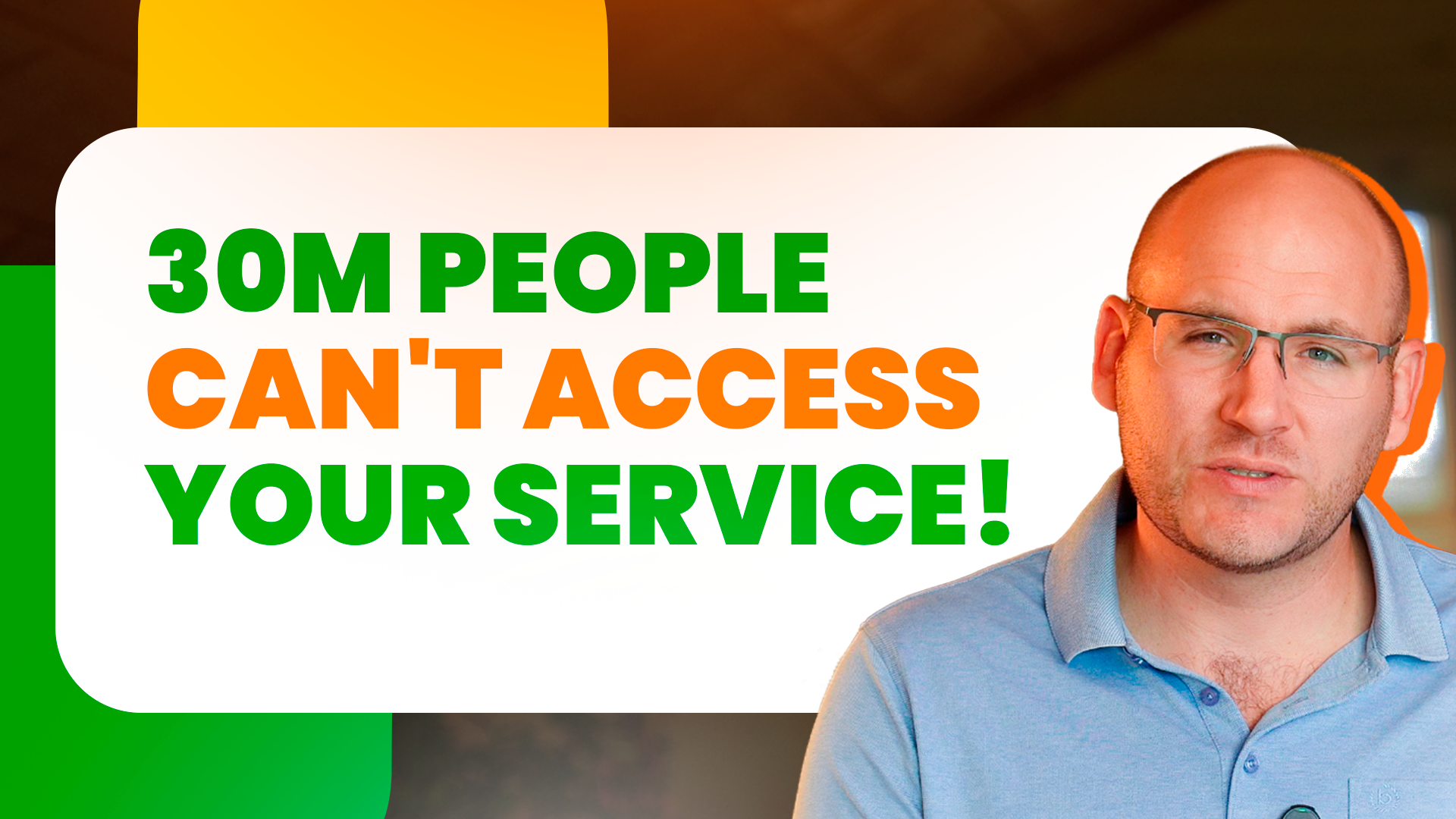
There are more than 30 million people inside the United States who cannot fully access the services available to them, because those services aren't delivered in a language they understand.
That's not a demographic footnote. That's a population large enough to rank as the 50th largest country on earth.
Every day, school districts send home enrollment packets that parents can't read. Government agencies hold public meetings where entire neighborhoods can't participate. Nonprofits serve refugees and immigrants who don't fully grasp the scope of what they're receiving.
The consequences are documented, not theoretical. Families disengage from their children's education. People lose services they're legally entitled to. And organizations that fail to act face civil rights complaints, corrective action plans, and the loss of federal funding.
What Title VI Actually Requires
Title VI of the Civil Rights Act is direct: any organization that receives federal funding must provide meaningful access to Limited English Proficient (LEP) individuals and communities.
Meaningful access means:
Translated vital documents (enrollment packets, benefit notices, policy forms)
Qualified interpreters at meetings where LEP individuals are present
Clear communication with non-English-speaking families in their primary language
The Office of Civil Rights and the Department of Justice have enforced this standard through corrective action, mandatory staff retraining, and the withholding of federal funds from districts found in violation.
Families have filed civil rights complaints. Lawsuits have followed.
Important note for 2025: Executive Order 13166 was revoked by Executive Order 14224 in March 2025, which designated English as the official language of the federal government. However, Title VI of the Civil Rights Act of 1964 remains law, and its language access requirements for federally funded organizations remain enforceable. The U.S. Commission on Civil Rights has clarified that Title VI protection still applies to LEP individuals regardless of the EO change. Organizations should verify their obligations with legal counsel, but the underlying compliance framework has not been eliminated.
Three Sectors Where Language Access Is Non-Negotiable
School Districts
Limited English Proficient student enrollment has grown every single year for decades. More than 67 million U.S. residents speak a language other than English at home.
Title VI is clear: districts must communicate meaningfully with all of them. That means translated enrollment documents, qualified interpreters at IEP meetings, and parent notices in the language of the household.
Machine-translated notices do not meet this standard. A document that misrepresents a child's educational path, a special education placement, or a disciplinary process carries real consequences. For the family and for the district.
Government Agencies and Municipalities
The compliance stakes are equally high for state and local government. Agencies receiving federal funding that fail to meet language access standards face OCR investigations, corrective action plans, and potential loss of funding.
Taika Translations holds contracts on NASPO ValuePoint Contract #17972 and the GSA Schedule, making procurement straightforward for government buyers. We understand the contracting framework because we operate inside it.
Nonprofits Serving Immigrant and Refugee Communities
Nonprofits often serve the communities with the highest language access need and the most limited internal resources to address it. Grants frequently carry language access obligations as conditions of funding.
A language access partner that understands compliance is not a luxury for these organizations. It's what makes the grant work viable.
Why Machine Translation Creates Risk, Not Access
AI translation tools have improved. They are still not appropriate for high-stakes documents.
The failure modes matter: cultural context is dropped, technical vocabulary is mistranslated, and in some cases, meaning is reversed entirely. A school enrollment form, an IEP document, and a government benefits application each carry a different vocabulary, different stakes, and different cultural nuances.
Taika's translators are native speakers and subject matter experts. They understand the context where a document was written and the context where it will be received. That distinction is what makes the difference between access and the appearance of access.
What Taika Translations Provides
Document Translation: School packets, IEP reports, parent handbooks, policy notices, government forms, legal documents, and benefits applications. Formatting and design are preserved. Accuracy is certified.
Interpretation Services: Over-the-phone and in-person interpretation for parent-teacher conferences, IEP meetings, community events, and public hearings. The human interpretation market in the United States reached $11.6 billion, representing a 25.5% increase in a single year.
Certified Translation: Certified content for federal agencies, universities, licensing boards, and immigration proceedings. Produced by credentialed translators, not AI review.
Language Access Consulting: Taika assesses your current language access posture, identifies compliance gaps, and builds sustainable solutions. From a single document to an organization-wide language access program.
What Makes Taika Different
There is no shortage of translation vendors. Here is the actual distinction.
Taika operates with the accountability structure of a government contractor. Deadlines are met. Documentation is maintained. Quality control is consistent. When compliance is on the line, you need a vendor that treats it that way.
Taika holds NASPO ValuePoint Contract #17972 and is listed on the GSA Schedule. Procurement officers at state and local agencies don't have to sole-source or build a new vendor relationship. The contracting vehicle already exists.
The team includes 2,000+ trained linguists across 300+ languages, operating 24/7. This is the infrastructure for a language access program, not a one-time project fix.
The Language Gap Is Real. So Is the Legal Obligation.
The 30 million people who can't access services in their language are not a future problem. They are in your school district's enrollment queue. They are at your agency's service window. They are reading the notices you're required by law to translate.
Taika Translations was built specifically for this work.
Request a quote at taikatranslations.com. Tell the team what you need: the documents, the languages, the timeline, and the scale. A clear professional proposal comes back fast.
Because the organization that needs those services is ready right now.





Taika Translations, LLC is based in Austin, Texas and serves school districts, government agencies, nonprofits, and corporate entities across the United States. For inquiries: projects@taikatranslations.com